How to Create your Most Successful Sales Sequence using Apollo
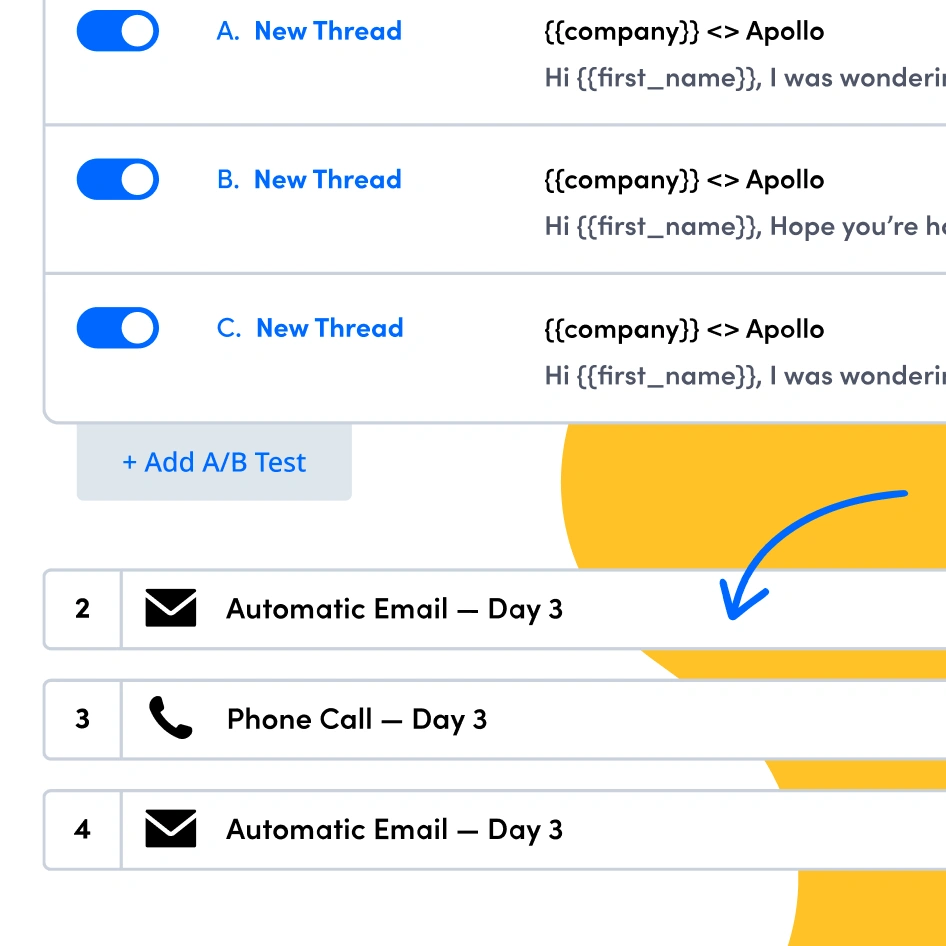
You have a lot to consider when it comes to building out a perfect sales sequence.
It may feel daunting, but establishing a clear and comprehensive sales process for your marketing and sales teams has never been more important. For B2B sales teams racing against quotas, SDRs juggling hundreds of prospects, and revenue ops professionals trying to scale outreach — the clock is always ticking. Every day without a proper sequence is another day of missed opportunities, inconsistent follow-ups, and deals slipping through the cracks.
The pressure is real. Your prospects are bombarded with messages. Your competition is automating their outreach. And your team needs to hit increasingly aggressive targets. But here's the thing — you don't need to reinvent the wheel. You need a system that works.
Apollo helps you do just that.
Let’s look at how you can use Apollo to create a successful sales sequence that accommodates the needs of your ideal buyers, guides your sales reps through important accounts, and takes your return on investment to new heights.
What is a sales sequence?
We should cover the basics.
Sales sequences are all about standardization.
They are a scheduled series of sales touchpoints with prospects. They include email campaigns, phone calls, social messaging and/or posts, SMS messaging, and any other tasks for your salespeople to carry out over the course of the sales cycle.
It’s important to note that a good sales sequence isn’t vague and interpretive. Sales sequences should eliminate all guesswork. They should include specific and pre-defined intervals between steps and the salespeople using them should know exactly what to do and when to do it - all without missing a beat.
The best sales sequences have the perfect combination of automation and personalization and utilize the strengths of both to their advantage.
At Apollo, we understand the importance of a well-structured sales process. That’s why we provide you with an entire feature dedicated to helping you build out those sales sequences.
Keep on reading to learn how to use it!
Why sales sequences matter for revenue growth
So, why bother with a sequence? Can't you just send emails when you feel like it? Not if you want to grow. A defined sales sequence is the difference between ad-hoc outreach and a scalable revenue machine. It ensures no lead falls through the cracks and every prospect gets the right touchpoint at the right time. You stop guessing and start selling systematically.
According to a study from Vantage Point Performance, B2B companies that have a well-defined sales process experience 18% more revenue growth than companies that don't. That's because sequences enforce consistency, boost team efficiency, and make your sales efforts predictable and measurable.
Steps to create a sequence
Steps are the building blocks of your new sequence in Apollo.
They are the individual messages and activities that you design for your team to successfully engage the prospects you’re targeting (this offers you a high level of personalization!). The sequences themselves are made up of as many steps as you choose with as much spacing between them as you want!
Here are the four types of steps:
- Automatic Email: Use any of your Apollo email templates and/or create new ones to craft personalized, targeted messaging to be delivered automatically based on the parameters you set
- Manual Email: A clearly defined and scheduled task to edit and deliver follow-up emails that you want fully customized to individual prospects, even if most the content is pre-defined in a template
- Phone Call: Add notes, tips, scripts, and any other helpful collateral within a clear reminder to call (use our Dialer to have your team call directly from their dashboard and automatically capture call recordings and additional insights)
- Action Item: A completely customizable task to perform any number of necessary internal communications or processes along the way to a successful sale
Types of sales sequences that drive results
Not all sequences are created equal. The right approach depends on your prospect and your goal. Think about it — you wouldn't use the same playbook for a warm inbound lead as you would for a cold outbound prospect. Here are a few common types to get you started:
- Outbound Prospecting Sequence: This is your classic cold outreach. It's designed to introduce your brand, build awareness, and book a meeting with prospects who don't know you yet. It typically involves a mix of emails, calls, and social touches.
- Inbound Lead Nurturing Sequence: When someone downloads an ebook or requests a demo, they're warm. This sequence is designed to educate them further, answer common questions, and guide them toward a sales conversation without being pushy.
- Re-engagement Sequence: Got a list of old leads that went cold? A re-engagement sequence can help you restart the conversation by sharing new value, like a recent case study or product update, to see if the timing is right now.
Subscribe for weekly updates
Creating a sequence in Apollo
As we’ve learned, sequences are customized outreach campaigns, designed to personally communicate and engage with your target audiences at scale. As you use Apollo to create and hone in on your ideal customer profiles, you can create Sequences to match each type of outbound and/or inbound prospect that you're targeting with automatic and manual messages, calls, and action items that speak directly to the value propositions they're looking for.
Your Apollo Sequences ensure that your team delivers the ideal communications and completes the right task at the right time.
Now, we’ll walk through how to use these steps to build a winning sequence, from start to finish.
First, navigate to Campaigns > Sequences. You’ll have the option to start a new one from scratch or use one of our many sequence templates.
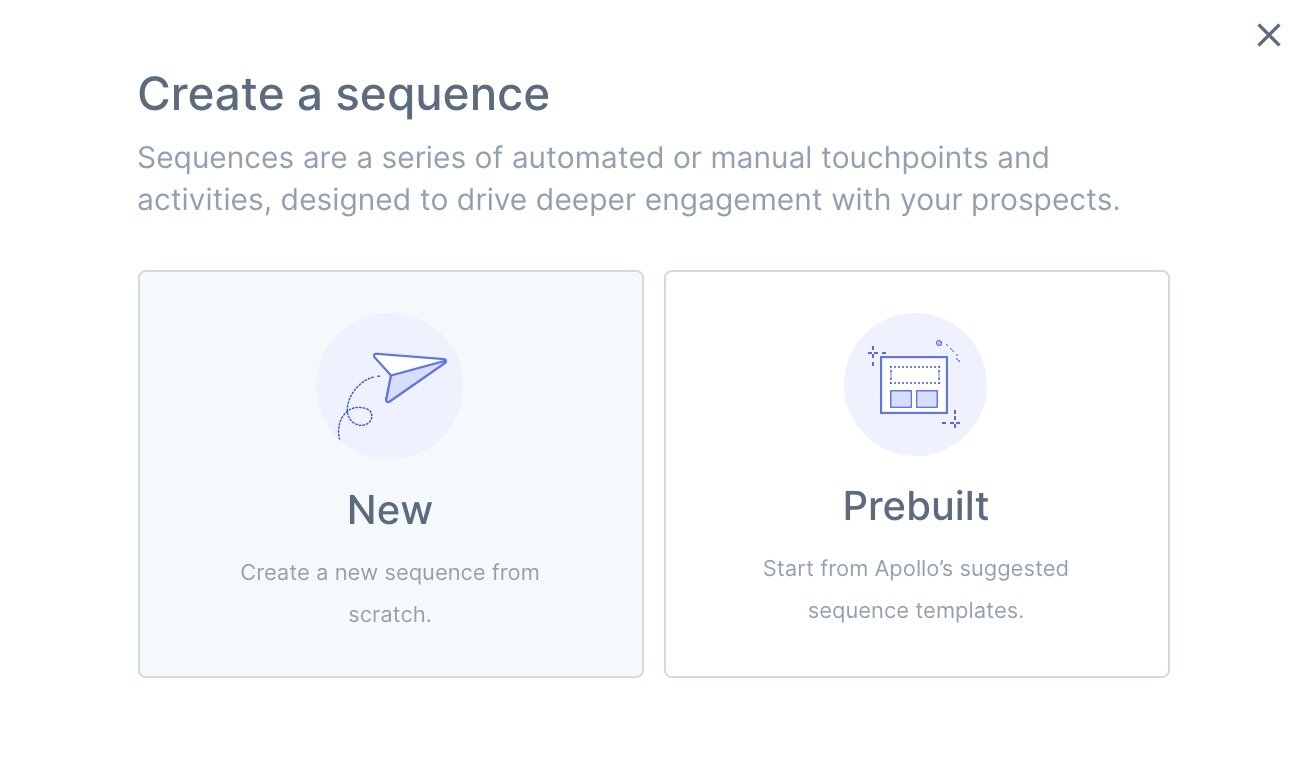
For the sake of this demo, let’s start a new sequence together!
Name and schedule your new sequence on the next pop-up window.
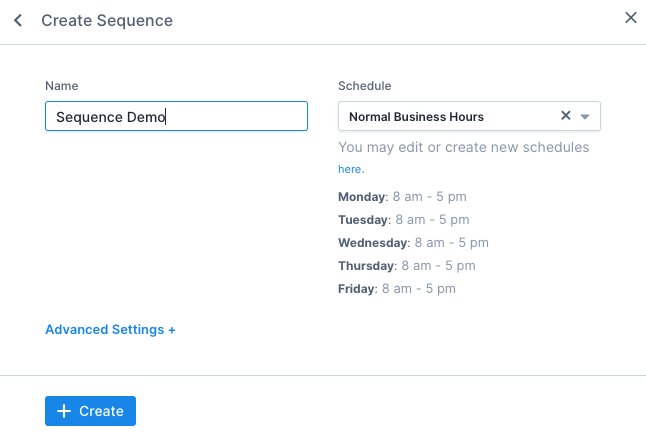
Once you click + Create, you’ll find your sequence dashboard. Click + Add Step.
This is where you’ll choose one of four-step types (Pst! The ones that we went over above!), as well as the time and wait time you desire between each step, the priority level, and any notes you want to give your SDRs.
It’ll look something like this:
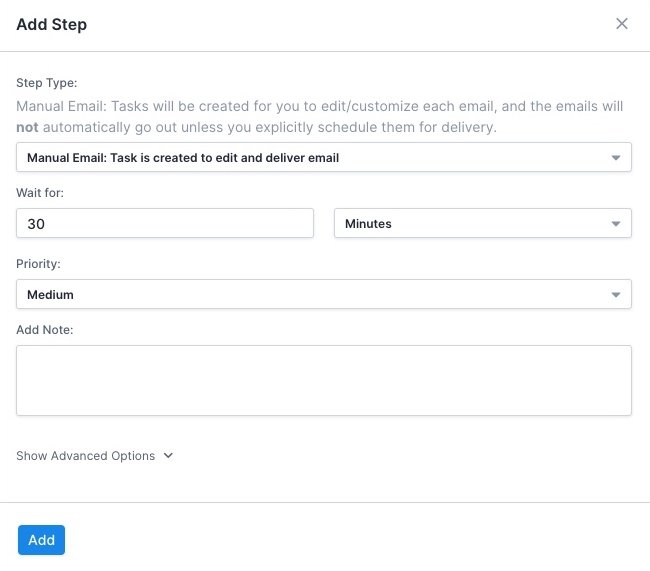
When you’re done click Add, and you’ll be taken back to your new and improved Sequence Dashboard. Repeat the process and add as many steps as you desire to create your most personalized and detailed sales sequence yet.
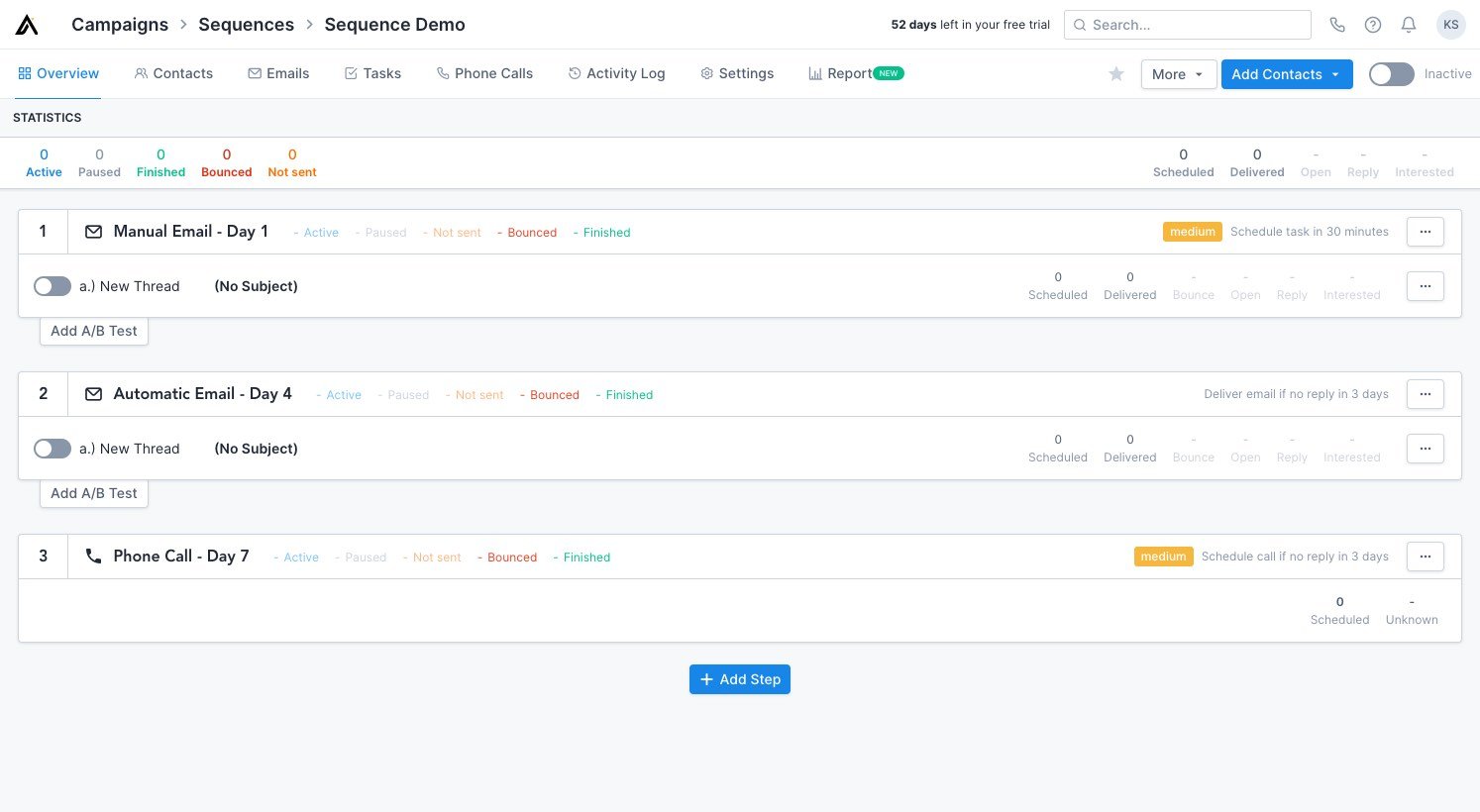
It’s as simple as that!
You can now add contacts to your sequence using the contacts you already have saved, the Apollo LinkedIn Extension, your CRM, and more.
Create as many of these sequences as you want and craft personalized sales experiences for each one of your ideal buyer profiles.
Looking at the navigation bar at the top, you can see that salespeople can manage contacts, emails, and phone calls, see the activity log, AND get reports, all within the same dashboard.
Sales and marketing teams are now given a system that works for them and actually saves them time and energy while maximizing conversion rates.
Sales sequence best practices that get responses
Before we send you off to champion the sales world, here are some additional tips to consider when creating sales sequences in Apollo:
- Don't mention all of your value in the first email! Use the sequencing format to expose what values you offer and what value is most important to each separate persona. Mention this specific value in the first touchpoint, and use the rest of the values to support your proposal to schedule more touch points.
- Use Case Studies in your sequence! Construct separate emails (using separate sequence steps) for every metric in your case study. This gives you the perfect format to create the need and advertise your solution.
- Prove your expertise. Communicate what you know about specific technologies, markets, titles, verticals, etc, and make clear what is unique about your product and level of service.
- Don't make them rely solely on your word. Share content! Give them evidence, links, documents, and provide them with two to three clear and concise reasons why they should check them out.
- Personalize your subject line. Personalized email subject lines are 22.2% more likely to be opened. Take advantage of the personalization opportunities Apollo's Sequences offers you and leverage that into your subject line.
How to measure and optimize your sales sequences
Creating a sequence is just the first step. The real magic happens when you start paying attention to the data and making improvements. If you're not measuring, you're just guessing. Here's what to track:
- Open and Reply Rates: Are people even seeing your messages? Are they engaging? Low open rates might point to weak subject lines, while low reply rates could mean your message isn't resonating.
- Meeting Booked Rate: This is a key success metric. How many prospects who enter a sequence end up booking a meeting with your team?
- Conversion Rate: Ultimately, you want to know how many prospects in a sequence become customers. This helps you tie your outreach efforts directly to revenue.
Use this data to A/B test everything — subject lines, calls to action, the number of steps, and the time between them. Small tweaks can lead to big improvements in performance.
Build winning sales sequences with Apollo
A well-crafted sales sequence is your playbook for consistent, scalable growth. It turns random acts of outreach into a predictable system for filling your pipeline. By defining your steps, personalizing your message, and measuring what works, you can stop leaving deals on the table.
Ready to stop guessing and start building the sales sequence of your dreams? Apollo gives you all the tools you need to find your prospects, create multi-step sequences, and automate your outreach in one place. Get Started for free today and see how much more you can sell.
Frequently asked questions about sales sequences
How long should a sales sequence be?
There's no magic number, but a common range is 8-12 touchpoints over 2-4 weeks. The key is to stay top-of-mind without being annoying. Test different lengths to see what works for your audience.
What's the difference between a sales sequence and an email campaign?
A sales sequence is a multi-channel series of one-to-one communications (emails, calls, social touches) that automatically stops when a prospect replies. An email campaign is typically a one-to-many email blast sent to a whole list at once, regardless of individual replies.
How many touchpoints should I include in a sequence?
It depends on your goal and audience. For cold outbound, you'll likely need more touchpoints (8+) across different channels. For warmer inbound leads, you might only need a few (3-5) to guide them to the next step.
When should I stop a sales sequence?
Most platforms, like Apollo, automatically stop a sequence for a contact once they reply to an email. You should also manually remove prospects if they give you a hard "no," say the timing is wrong, or if you connect with them live and book a meeting.
Can I use the same sequence for different buyer personas?
You can, but you shouldn't. The most effective sequences are tailored to the specific pain points, goals, and language of a particular buyer persona. Create separate sequences for each major persona you target for much better results.
Share this post
Start using Apollo today
Start your free trial with Apollo today—then use these resources to guide you through every step of the process.
Start using Apollo today
Start your free trial with Apollo today—then use these resources to guide you through every step of the process.
or
By signing up, I agree to Apollo's Terms of Service and Privacy Policy.
Continue Learning
Explore these handpicked resources to deepen your understanding of AI-powered GTM
Sales Email Subject Lines that Actually Convert (with Examples!)
Email subject lines are the MVPs of email marketing. Learn how to create and optimize email subject lines that convert.
The 5 Best Sales Sequences We've Ever Seen
Take your outbound to the next level with automated sequences of touchpoints, custom designed to deliver value to prospects at scale. Here are the top 5 sequences you should try today.
What is the Best Time of Day to Call or Email Prospects?
Research says you can drastically increase your conversion rates by simply contacting your prospects at the right time of day. Learn the best times to reach out here.
How to Use Content in Prospecting Emails to Avoid the Cold Shoulder
Tired of being "left on read" by your prospects? Here's how Letterdrop CEO Parthi Loganathan and his team snag their prospects' attention by sharing value-additive content in their cold emails.