The New Rules of Cold Calling: What It Means (and What It Takes) Now
12 min read
On This Page
Cold calling is back, baby. But did it ever really go away?
In recent years, yes—sales teams have pivoted away from cold calls. In a poll of Apollo users, only 28% of sellers cold call daily and 53% say they don't cold call at all, opting instead to invest in email and social.
This, however, has driven an explosion of DMs and emails. Buyers' inboxes are bustling, busy, and often unbearable. As a result email open rates have fallen and reply rates have been in a steady decline of 10% every year for the past decade.
What does this mean practically speaking? Green space has opened in cold calling. 69% of buyers accepted cold calls in the past year, signaling huge opportunity for teams willing to pick up the phone, consistently and strategically.
Fueled by expert tips from Apollo's own James O'Sullivan, this guide will cover the foundations of modern cold calling, how calls fit into a modern, multichannel strategy, and expert-proven scripts that separate superstars from the pack.
What is cold calling?
By definition, cold calling is when a sales rep makes a phone call to a potential customer — someone who has little to no meaningful engagement with you and what you sell.
Cold calling if often applied as entry-level sales work.
New SDRs hit the phones, rattle off their scripts, and hope to land a meeting for their AEs. But, this traditional approach turns into an unsophisticated numbers game where SDRs burn through huge lists of unqualified leads, hoping to stumble across an active buyer.
Unsurprisingly, it becomes a chore rather than a strategy.
Cold calling needs to be the bedrock. It's got to be routine — everyone's got to do it.
- James O'Sullivan, Academy Instructor at Apollo
Modern cold calling is a team effort that replaces volume with precision, says James.
Better targeting, fed on data and AI-backed insights, can point you towards the prospects who have a real intent to buy. Paired with other multi-channel touchpoints, it's proven to raise your overall success rate.
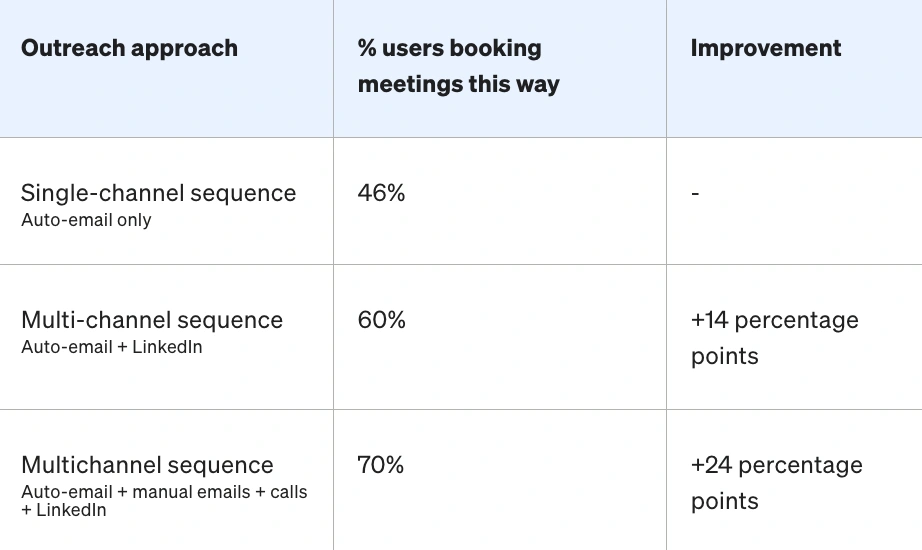
FACT: Multichannel sequences (aka email and social PLUS calling) increase meeting rates by up to 24%.
Adding calls to your prospecting sequences gives extra breathing room to your email and social touches, too, and protects your deliverability.
Is cold calling still effective in 2025?
Smarter cold calling demands a smarter organization and sales leaders are adapting the makeup of their teams. One key change is to make cold calling a common skill. Everyone — SDRs, AEs, everyone — can then be expected to prospect.
The psychology of cold calling: Why it works (or fails)
Status quo bias is a formidable beast.
People will keep doing what they've been doing, whether that's getting takeout from the same old restaurants, putting off going to the gym, or continuing to use a lackluster vendor at work.
Cold calling works because it interrupts a buyer's status quo, in a few key ways.
1. It earns attention. Buyers can walk past a billboard and swipe away an unread email, but it's much harder to ignore their phone when it's buzzing on their desk. Cold calls force people to engage with you — even if it's declining the call.
2. It humanizes the message. Calls naturally provide more context through tone, pace of conversation, and demeanor. All of this adds depth to a sales conversation.
The more humanity in your communications, the deeper in conversation you can go and the quicker you can move.
- James O'Sullivan , Academy Instructor at Apollo
3. It protects your deliverability. Scaling email outreach is fast and easy, but there's a risk of pushing it too far. Endless emails can burn domains and create a fast track to spam filters — or buyers sending you to spam themselves.
What makes top performers stand out from the pack?
Whether you're leading a team or trying to work your way to the top, it's important to differentiate good from great.
Here are some of the key qualities that separate superstar cold callers from the pack.
Top performers are comfortable with rejection
Reps only get comfortable with the discomfort of cold calling when it's a routine part of their job. That takes practice, practice, and more practice.
"Nobody is good at first," says James, "You get good once you get over the fear of dialing."
With enough practice and repetition, sellers become desensitized to the discomfort of rejection. They stop feeling afraid of calls and begin to embrace them.
Top performers consistently nail their first impressions
The reality is, buyers will say anything and everything to brush you off and get back to their work.
Your ability to make a stellar first impression, survive the brush-off, and open a genuine conversation relies on how you present yourself in your first 30 seconds. Great reps will:
- Open with confidence and personality
- Show relevance and understanding
- Personalize scripts on the fly to react to buyer's responses
If you deliver a pitch-perfect first 30 seconds, you earn the right to the next 30 seconds. And the 30 seconds following that. The ability to earn a prospect's time is probably why a top performing cold caller only needs 8 calls to land a meeting — while average reps need 19.
Top performers hone their tonality
When you're on the phone, the only tool you have at your disposal is your voice. And how you use it matters. Studies have found that only 7% of human-to-human communication is in what you say; the rest of what's communicated is in how you say it through tone and body language. Similarly, data from Gong shows that the words a seller uses have a single-digit impact on deal outcomes. How a seller speaks — their tone, inflection, and rhythm — drives a 38% improvement.
Mirror a prospect's tone, energy, and language. Don't be afraid to veer from the script, either. They're just words on a page.
Best times to make cold calls
Timing is everything. Calling a prospect while they're in a deep-focus block or a high-stakes meeting is a surefire way to get a dial tone. So, when's the best time to call?
While some studies point to late mornings and late afternoons on Wednesdays and Thursdays as prime time, the truth is, it depends entirely on your audience. The best way to know for sure is to test different days and times and track your connection rates.
Better yet, let technology do the work for you. Platforms like Apollo can analyze engagement data to suggest the optimal time to reach out to each specific prospect, taking the guesswork out of your dialing schedule.
How to transform cold calling across your sales org
To transform cold calling from a dreaded task to a powerful advantage, start with team or organization-wide fixes to change the perception around it as a whole.
Team-wide cold calling best practices
- Reposition cold calling as the core of your sales function. Make cold calling a common expectation across your sales organization. Turn it into your competitive advantage and growth engine. When leadership champions calling as a strategic activity rather than a volume exercise, everything changes.
- Prospect smarter with data and AI. Gone are the days of unqualified lists and spray-and-pray call strategies. Modern cold calling begins long before you dial. Data-driven prospecting uses intent signals, technographic information, and behavioral patterns to identify prospects with genuine need — the 5% of your buyers who are actually in market. Smart sellers use predictive scoring models to identify which accounts show buying signals and when they're most receptive to conversations. Sellers can prioritize those accounts, increasing conversation quality and conversion rates.
- Protect time for practice. Without air cover from seniors, reps won't feel confident taking time out to run the hundreds of practice calls necessary to get good. Carve slots into your reps' calendars. Make it mandatory.
Repitition is important. Can you go through that script effectively? Are you stumbling on the same parts? Change it.
- Arely Brattin, Senior Sales Development Manager at Orum
- Incentivize cold calling. Reps won't experiment with new tactics if it's going to compromise their quota. Give sellers freebie leads when they hit their numbers, but require them to cold call the prospect.
- Real-time coaching. Traditional coaching is backward looking. It asks managers to review calls days or even weeks after they happen. It's all too slow. Modern sales platforms power faster interventions. Managers can jump into active calls, riding along and reviewing rep performance. After the call, they can deliver in-the-moment coaching, reaching reps when they are most receptive and ready to learn.
Individual rep best practices
Once you have a strong organizational foundation, turn your attention to individual rep performance.
- Embed research and personalization as standard. Generic scripts fail. Period. Research takes minutes but yields massive conversion gains. Focus on two or three relevant insights about the prospect or their company.
- Perfect your timing for more connections. When you call matters as much as what you say. Test different days/times to find your audience's availability patterns. Or, better yet, leverage technology to identify the best times for you.
- Combine cold calling with multichannel outreach. Isolated calls underperform. Strategic combinations win.
Warm calls with pre-call emails or social touches, but remember to customize your messaging to each channel.
Cold calling scripts that convert (and where to find them)
Using cold calling scripts gives you guardrails.
The idea isn't to strictly adhere to words on a page, but to use the psychological tactics woven between the words to make the most of every second.
Below are some of our favorites, click the link to steal one for free:
There's plenty more in the Apollo template library, including email messaging, automated workflows, and AI prompts. Check it out free on the Academy!
Segment your cold calls by company size
Arely Brattin, the Senior Sales Development Manager at Orum, cautions for cold calling segmentation based on company size. She says it's one of the things sellers often overlook.
"Company size definitely matters," she says, "SMB, Midmarket, and Enterprise buyers all care about really different things."
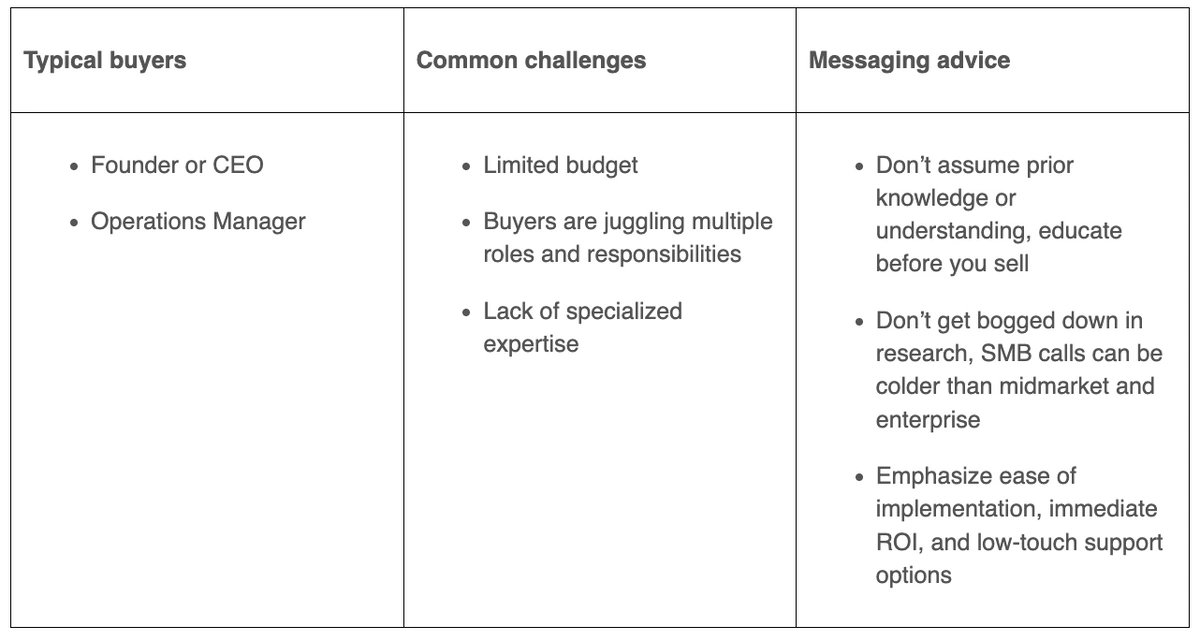
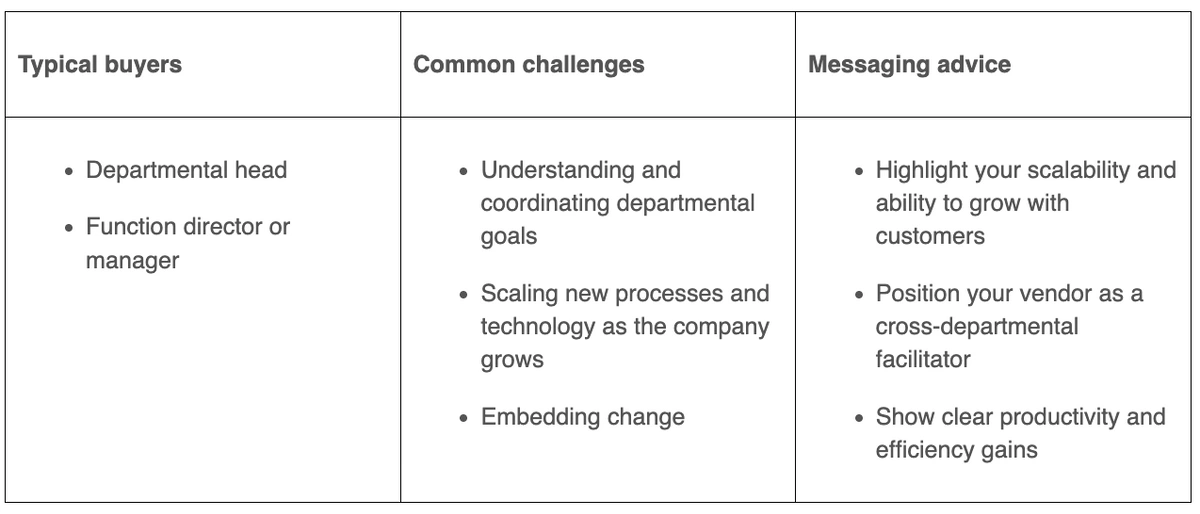
Here's a quick cheat sheet for segmenting calls based on company size as you build out strategic cold calling campaigns.
Small and medium-sized businesses (SMB)
Mid-market teams
Enterprise
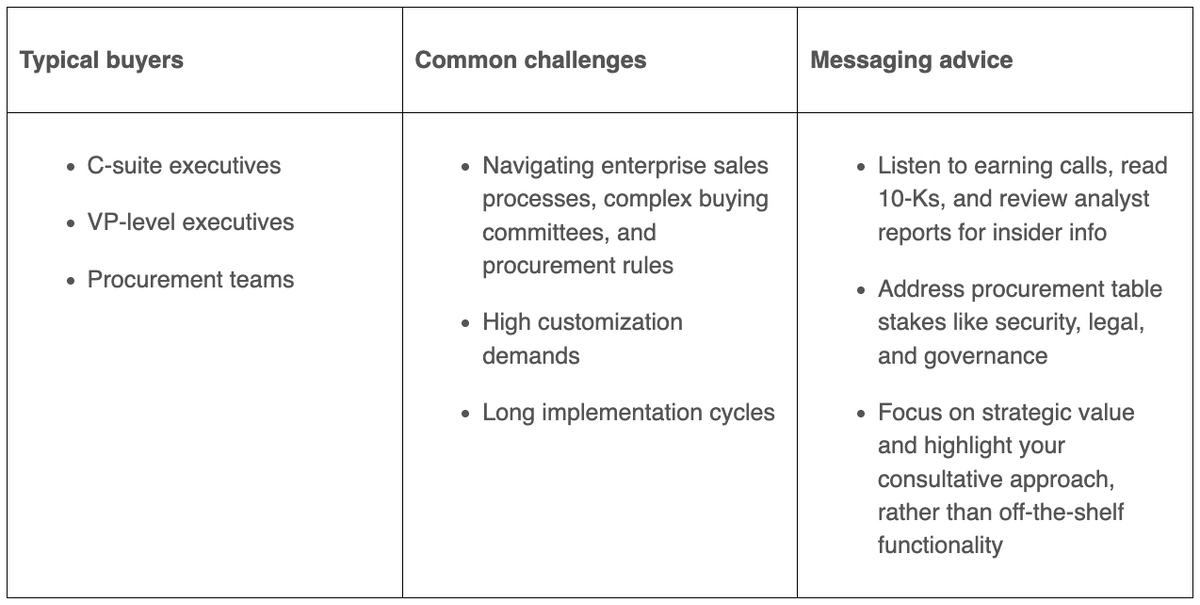
"As you go upmarket, you need to get more strategic," Arely warns.
Bigger companies have less time to spare and more revenue to prove, so your cold calls need to be both hyper-timely and relevant (meaning it ideally wouldn't be the first time they have ever heard from you). Use touchpoints across other channels to build that familiarity.
How technology is changing cold calling forever
Sellers only spend one-third of their working day on selling activities.
Add that up across a year, and they spend hundreds of hours in unnecessary meetings, performing duplicative work like data entry, and just talking about work. The good news? Tech is finally ready to step in and shoulder some of the grunt work.
New sales technology, driven in large parts by artificial intelligence advances, is reinventing how sellers sell. How?
1. Faster, better account research
Over 80% of top-performers research before every call. The problem is, research is time-consuming. The average seller spends up to 10 hours a week — an entire day — researching accounts.
With the right prompt, AI shortcuts the research process.
You can ask AI to summarize a contact's professional background. Or provide you with recent news on their company. Or even, that of their competitors.
Reps can slot in right at the end of the research process, making final tweaks and injecting their own personality. It's personalization at scale without hours of tedious research.
2. Real-time transcripts, note-taking, and follow-ups
Reps can't manually record every sentence — but transcription technology can. It remembers everything, builds a record of every deal, and automatically logs follow-up actions.
Conversation intelligence technology helps sales leaders coach better cold calls, too. Behind AI, you can get tailored improvements for smarter sales conversations.
3. More conversations with parallel dialing
Parallel dialing automates the dialing process — saving the time your reps spend punching in digits. A central system dials multiple numbers simultaneously. It's only when someone picks up or a voicemail kicks on that it passes the call to a rep.
👉 Learn how Instabug doubled their meetings with Apollo data + a Nooks dialer
4. Smarter targeting based on historical data
Targeting by gut feel and intuition is a thing of the past. Improve your sales performance with pinpoint targeting of your highest-value accounts and prospects. Let AI analyze your past, present, and pending deals to identify and score your best customers and buyers.
Use prompts (ex. "find companies that recently IPO'd") to pull out the leads you know are more likely to convert. Living databases are continually ingesting new data, identifying changes, and updating your best times to call.
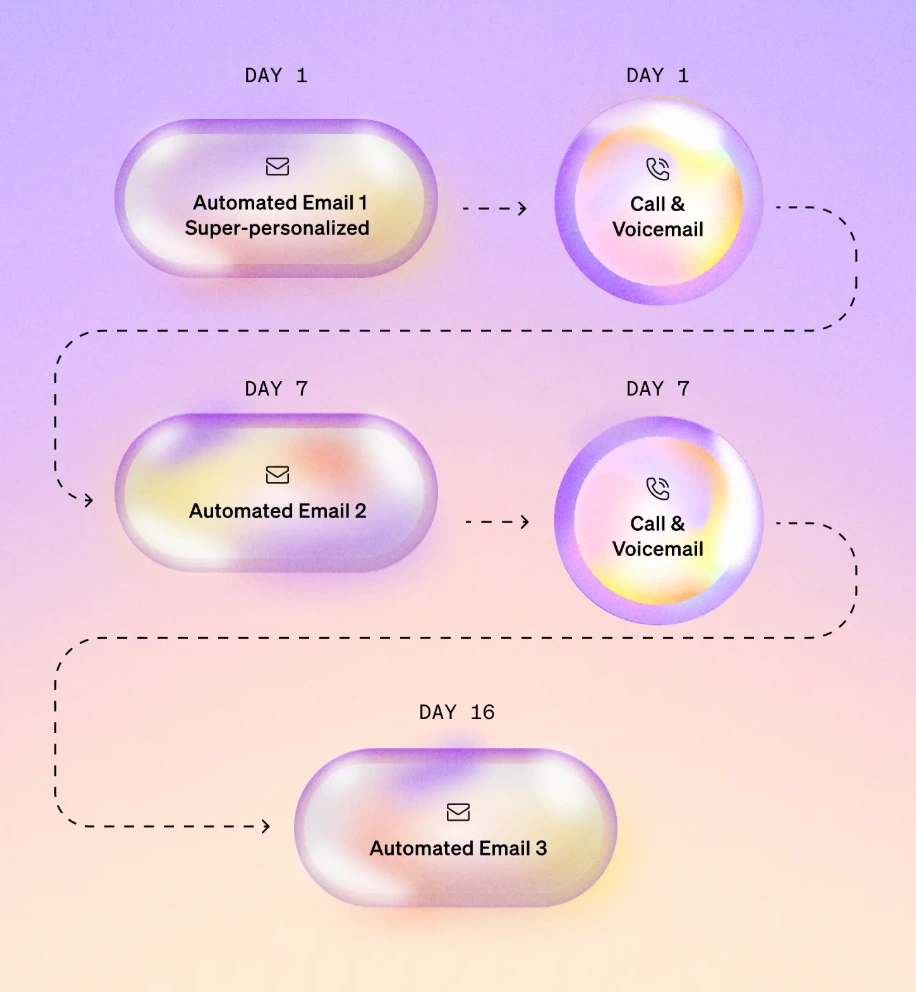
5. Automated multichannel outreach
On its own, cold calling is effective, but as part of a multichannel cold outreach strategy, it's formidable.
It systematizes excellence across your organization without reps putting in any more effort; because if your call arrives after a thoughtful LinkedIn comment, you're no longer a complete stranger. You're a persistent seller whose name they know (even if just a little bit).
A successful cold calling motion can exist even in a simple multi-channel design that alternates between automated email and phone call.
How to handle objections during cold calls
Most reps are familiar with that sinking feeling when they hear a hard objection.
Yeah, I don't have time for this. We already use your competitor. I don't deal with this.
Most objection-handling advice focuses on the words a buyer says, but what they say usually isn't an honest reflection of what they're thinking. Instead, it's an excuse to get off the phone — honest, invented, or otherwise.
Effective objection handling often uses something unexpected — a joke, a non sequitur, whatever — to break the pattern and convince them to engage in a productive conversation.
Here's how it works with some of the most common objections.
Objection: "Can you send me an email?"
Response: "I get it — you're very busy, and I caught you out of the blue. Heck, I've used that line myself to get out of a cold call. Would you be able to give me one minute to explain why I called you?"
Objection: "We already use [competitor]" or "We already have a solution."
Response: "How do you like it? What grade would you give it from A to F?"
[If the buyer answers below an A] "What's missing from it being perfect?"
[If the buyer answers an A or A+]: "What can I do to get on your calendar? If you're giving [competitor] an A, I am really looking forward to your reaction when you see [product/solution]."
Objection: "I don't have time."
Response: "Can you take a quick break and put your feet up for one minute? I promise I won't add any more work to your plate."
Objection: "I'm the wrong person" or "I don't handle that."
Response: "That's a shame! I was just getting future best friend vibes. Any chance you know who I should be speaking to?"
For more unique responses and objection handling tips, use our How to Cold Call resource kit.
A note on cold calling compliance and best practices
With new data privacy laws popping up around the world, everyone's asking, "Are cold calls still technically legal?"
The short answer is — yes! Cold calling is legal in most countries and regions around the world.
The long version is more complicated.
First, be aware of cold calling laws like:
- The Telephone Consumer Protection Act (TCPA): In 1991, the FCC created new rules to protect people from intrusive marketing and sales calls. The Act limits the use of auto-dialers, pre-recorded messages, and text messages.
- General Data Protection Regulation (GDPR): The EU rolled out its own wide-ranging privacy legislation in 2018. With GDPR, a key consideration is whether sellers have a lawful right to use someone's data for sales activity. In the B2B space, that means you suspect they may have a legitimate interest in your product or services.
Laws like these restrict how companies acquire and use personal data. So long as you play by their rules, cold calling is still legal.
Most countries also operate "do not call" (DNC) lists or registers. They're the virtual equivalent of a "No Solicitation" sign on someone's front door. Contacts on DNC lists get a hard pass. Some, like the US National Do Not Call Registry, are even backed by laws and attract significant fines for people who ignore them.
Track these cold calling metrics to improve performance
Activity without measurement is like sailing without a compass. Metrics keep you tracking toward success.
Here are the metrics and KPIs you need to turn cold calling from an art of persistence into a science of precision.
Activity metrics: Are reps putting in the dials?
- Call volume: The total number of outbound calls made by a sales rep or team in a given period. A higher volume creates more opportunities, but must be balanced with quality
- Conversation rate: The percentage of calls that result in meaningful conversations with decision-makers. This measures targeting accuracy and opening effectiveness.
- Call duration: The average length of conversations with prospects. Longer isn't always better. Look for your sweet spot that indicates engagement without time-wasting.
- Call-to-meeting ratio: The percentage of conversations that convert to scheduled meetings. It's the ultimate effectiveness metric that impacts pipeline creation.
Quality metrics: Are your conversations moving the needle?
- Objection rate: The percentage of calls where prospects raise specific objections. This tracks common resistance points and helps you refine your messaging.
- Qualification rate: The percentage of conversations that result in qualified prospects. This measures your reps' ability to efficiently identify fit and avoid wasting time.
Performance metrics: Is all that talking turning into money?
- Opportunity creation rate: The percentage of calls that generate legitimate sales opportunities. The critical conversion metric that links calling activity directly to pipeline impact.
- Pipeline value generated: The total monetary value of opportunities created through cold calling efforts. It quantifies the actual revenue potential being driven by outbound calling.
- Average deal size: The typical value of opportunities generated through cold calling. This helps evaluate if calling efforts are targeting the right level of prospect.
How to make adjustments if call metrics are down
On their own, metrics don't drive improvement. Effective leaders turn data into action.
Here's how they do it.
Locate pipeline leaks and patch them up
Categorize your calls using call purpose data, and compare pipeline performance to industry benchmarks.
If you're falling below the benchmark, that's a sign something's wrong with your pipeline — a leak spilling revenue. If the leak is in an early pipeline stage — prospecting or qualification — drill deeper.
Is a poor cold calling script alienating prospects?
Are reps fumbling through objections?
Is your new positioning falling flat with buyers?
Once you find a problem point, don't jump to a knee-jerk fix. Isolate each variable and test them systematically.
Try and test new things to improve scripts, scheduling, and prospects
Don't rest on your heels — even when times are good. Always have tests and experiments running in the background to evaluate different parts of your cold calling strategy.
Consider elements like:
- (Permission-based) openers
- Pain or challenge scenarios
- Pitch or future state
- Questions
- Objection-handling
- Scheduling
- Buyer persona
Stay detached and objective. If something's not working, change it up. And if you stumble on an effective experiment, roll it out immediately.
The future of cold calling: Better, faster, and smarter
As we enter a new era of sales, the basics of cold calling practices haven't changed — but the tools that power them are.
AI-powered research, smarter targeting, and multichannel automation are eliminating the waste that once defined cold outreach. Instead of dialing down a list of strangers, reps are reaching out with context: knowing what a prospect's company just announced, which tools they're using, and what pain points are likely top of mind. Calls aren't just faster — they're better timed, better framed, and better received.
Apply the cold calling techniques that work in an AI-powered tool that brings research, targeting, and outreach together — all in one place.
Frequently asked questions about cold calling
Is cold calling legal?
Yes, cold calling is legal in most places for B2B sales, but you have to follow the rules. Regulations like the TCPA in the U.S. and GDPR in the E.U. set guidelines on how you can contact prospects. Always scrub your lists against national Do Not Call (DNC) registries to stay compliant.
What are good examples of cold calling?
A good cold call isn't a monologue; it's a conversation starter. Instead of a hard pitch, you might open with, "Hi [Name], I noticed your company recently [mention recent event or trigger]. We help companies in your space solve [relevant problem]. Is that something on your radar?" The goal is to be relevant and respectful of their time.
What are the 3 C's of cold calling?
The three C's are Confidence, Clarity, and Conviction. Confidence is how you sound on the phone. Clarity is how easily the prospect understands why you're calling. Conviction is your belief in the value you're offering. Nailing all three helps you build trust quickly.
Why do most cold calls fail?
Most cold calls fail for a few common reasons: poor timing, lack of research, a generic script, or a focus on the product instead of the prospect's problem. The best callers avoid these pitfalls by preparing for each call and leading with value, not a sales pitch.
How many cold calls should I make per day?
There's no magic number. Quality beats quantity every time. Instead of focusing on a specific number of dials, focus on the number of quality conversations you have. A rep who has 10 well-researched, meaningful conversations will always outperform a rep who makes 100 random dials.
Share this post
Start using Apollo today
Start your free trial with Apollo today—then use these resources to guide you through every step of the process.
Start using Apollo today
Start your free trial with Apollo today—then use these resources to guide you through every step of the process.
or
By signing up, I agree to Apollo's Terms of Service and Privacy Policy.
Continue Learning
Explore these handpicked resources to deepen your understanding of AI-powered GTM
Sales Email Subject Lines that Actually Convert (with Examples!)
Email subject lines are the MVPs of email marketing. Learn how to create and optimize email subject lines that convert.
The 5 Best Sales Sequences We've Ever Seen
Take your outbound to the next level with automated sequences of touchpoints, custom designed to deliver value to prospects at scale. Here are the top 5 sequences you should try today.
What is the Best Time of Day to Call or Email Prospects?
Research says you can drastically increase your conversion rates by simply contacting your prospects at the right time of day. Learn the best times to reach out here.
How to Use Content in Prospecting Emails to Avoid the Cold Shoulder
Tired of being "left on read" by your prospects? Here's how Letterdrop CEO Parthi Loganathan and his team snag their prospects' attention by sharing value-additive content in their cold emails.