List Building Basics: How to Build a Successful Email List

Every sales rep knows the drill — you need qualified leads, and you need them now. But here's the thing: while you're chasing down cold prospects and dealing with low response rates, there's a more efficient way to fill your pipeline with people who actually want to hear from you.
Email list building isn't just another marketing tactic. It's your direct line to prospects who've already shown interest in what you're selling. According to Content Marketing Institute's 2020 Report, content marketers rate email newsletters and email communication as their highest-performing content type for securing and nurturing leads.
The challenge? Building a quality email list takes more than slapping a signup form on your website and hoping for the best. You need strategies that actually convert visitors into subscribers, tools that automate the heavy lifting, and a system that keeps your pipeline full without eating up your entire day.
This guide breaks down exactly how to build an email list that feeds your sales efforts — from creating irresistible opt-in offers to leveraging automation tools that work while you sleep. Whether you're starting from zero or looking to accelerate your current list growth, you'll find practical tactics you can implement today.
What is list building and why does it matter?
The term list building refers to the process of growing your mailing list by collecting email addresses from visitors, customers, and other patrons. When you list build, you can use websites, social media accounts, events, in-store sign-up sheets, online forms, etc., to gather your email list data.
The goal of list building is to grow your subscriber database and boost your future sales communications with current and potential customers.
Email list building is an essential business strategy. Take this statistic into consideration for a moment:
Over 59% of consumers state marketing emails either positively or negatively influence their purchasing decision.
This means that the majority of people on your email list will either be deterred away from your product or more interested in your product solely based on your email strategy.
List building is a valuable process because it contributes to your business' owned media.
Your email list is a media channel that you have complete control over. It is an outbound sales method that is not only cost-effective, but personalized in messaging and content marketing. It also gives you:
- Wide outreach. List building allows you to identify prospects from anywhere and everywhere, while simultaneously building brand awareness.
- Marketing protection. A marketing worse-case scenario - Google drops you from SERP rankings. But with list building, you can overcome the Google algorithm because email lists always remain untouched.
- An idea of your buyer persona. Gathering the email addresses of those interested in your product or service and sending personalized emails is a great way to learn from your customers and their needs. List building can also help with customer segmentation.
Email list building strategies that actually work
Building a high-quality list doesn't take a ton of learning or resources, but it does require patience and strategy. Lucky for you, we've compiled a list of methods to help you gather a database of loyal subscribers!
Create compelling incentives
Creating incentive is 'Sales and Marketing 101'. But it is an important thing to re-emphasize when you're looking to expand your mailing list.
There are infinite ways to provide incentives for people to join your email list, and it will vary depending on the type of organization you are and what you are marketing (i.e. a sustainable jewelry company will offer its target audience a vastly different incentive than a financial services firm).
Here are some ideas that are worth considering. You can offer:
- Discounts and offers
- Early access and exclusive promotions
- A content upgrade
- 'Insider' information
- eBook access
- Free email courses
- Entry in a contest or giveaway
- Free trial memberships
Regardless of which route you choose to take, it is important that the incentive you give is valuable to your target audience. Make sure it is attention-grabbing and brand consistent.
Subscribe for weekly updates
Maximize subscription opportunities
Building a large and usable email list means making it incredibly easy for people to subscribe across your website and social channels. A website visitor should have multiple opportunities to become a new subscriber.
Optimize your checkout process
If your business sells something online, you can use email signup on checkout forms to capture email subscribers.
You've seen it a million times, but check out how clothing brand, Nau, implemented this option in their checkout process:
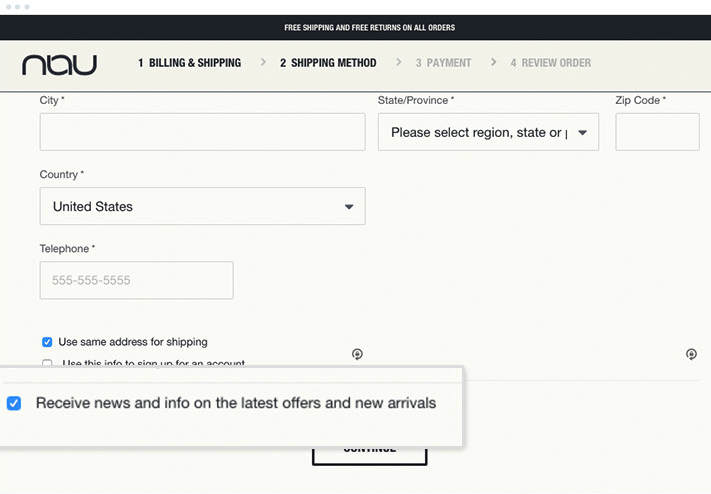
This is a great method because people are already entering their names, email addresses, and phone numbers as part of the checkout process, all it takes from them is a quick 'tick' of the box.
Use website contact forms strategically
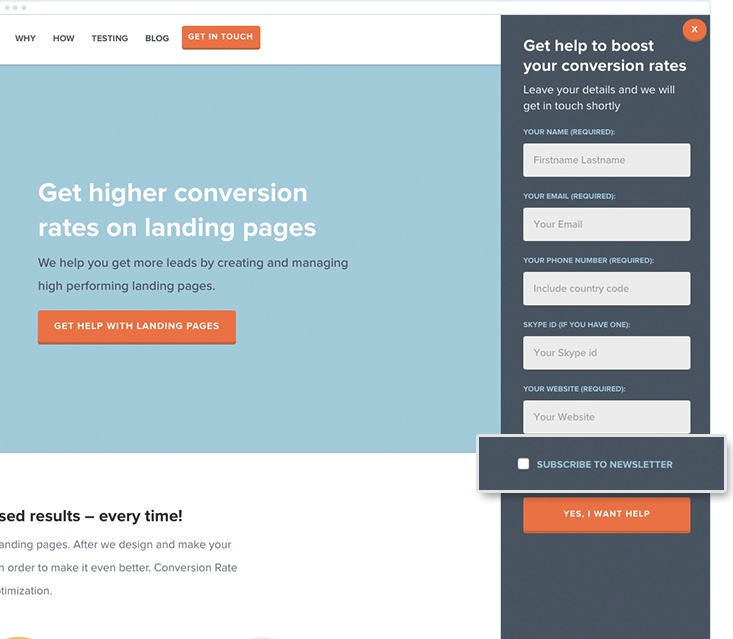
A website contact form is another great place to engage with a potential subscriber. If your site has a place for visitors to request a quote or to get in contact with a customer service representative, you should add a subscription tick box.
Again, these people are already entering their details into the form, and they are displaying a clear interest in what you have to offer.
Here's an example from ConversionLab:
Leverage social media for list growth
If your business is active on social platforms, using Twitter Lead Generation Cards is a great way to expand your list building efforts to social media.
A Lead Generation Card is a simple link that you can include in your business' promotional tweets. Users can click the link and easily and securely share their email address with a business without leaving Twitter or having to fill out a full and cumbersome form.
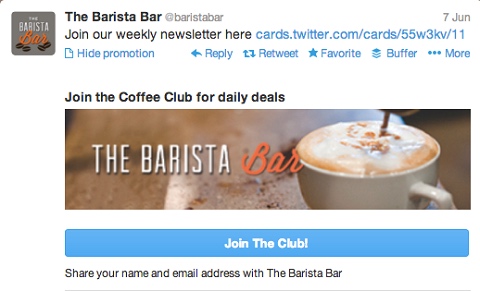
To learn more about marketing campaign opportunities on Twitter, visit their Ads Help Center here.
Turn email signatures into list builders
A single sales rep sends hundreds, many even thousands of emails to customers and potential buyers each month. There's no reason why sales reps shouldn't be using their email signatures to their full advantage. It is an easy, free, and convenient way to promote a message.
It is also the perfect place to promote your mailing list. Especially because we know the people we are targeting with this method regularly use email.
Be sure to include a link to a landing page or signup form in your email signatures. It is that simple.
Write calls-to-action that convert
Sometimes all it takes to create an engaged subscriber is the perfect CTA.
HubSpot Research found that personalized calls-to-action have a 42% higher view-to-submission rate than generic CTAs.
Your landing pages' CTAs need to meet the unique needs of your viewers.
For instance, if you have high traffic to your "Cold-Calling Tips" blog post, why not end that page with a simple CTA like this: "Subscribe to our mailing list for a cold-calling guide today!"
Offering content that is directly related to your potential clients' needs shows them that your mailing list gives them value.
Try to create unique CTAs for each landing page.
How to create high-converting opt-in forms
Your opt-in form is the gateway to your email list, and every element matters. The most effective forms balance simplicity with clear value — you want to minimize friction while maximizing the perceived benefit of signing up.
Start with the basics: ask for the minimum information needed. For most B2B lists, a name and email address are sufficient to begin the relationship. You can always gather more data through progressive profiling as the relationship develops.
- Above the fold on high-traffic pages
- At the end of valuable blog posts when readers are most engaged
- As exit-intent pop-ups to capture leaving visitors
- In your website's header or sidebar for persistent visibility
- Within content as inline forms when contextually relevant
Your form's copy needs to communicate value instantly. Skip generic phrases like "Sign up for our newsletter" and instead focus on specific benefits: "Get weekly sales templates that convert" or "Join 10,000 revenue leaders getting exclusive insights".
Design matters too. Use contrasting colors for your submit button, keep form fields clearly labeled, and ensure everything works seamlessly on mobile devices. A/B test different versions — sometimes changing button text from "Submit" to "Get My Free Guide" can double conversions.
Email compliance and deliverability best practices
Building a list the right way isn't just good practice — it's essential for your sender reputation and legal compliance. Every country has different rules, but the fundamentals remain the same: respect your subscribers and be transparent about what they're signing up for.
Always use explicit opt-in methods. This means subscribers actively choose to join your list by checking an unchecked box or filling out a form specifically for email subscription. Pre-checked boxes or adding emails from business cards without permission will hurt your deliverability and could result in legal issues.
Key compliance requirements include:
- Clear identification of who's sending the email
- A physical mailing address in every email
- Easy, one-click unsubscribe options
- Honoring unsubscribe requests within 10 business days
- Accurate subject lines that reflect email content
Beyond legal compliance, focus on deliverability. Keep your list clean by regularly removing hard bounces, inactive subscribers, and role-based emails. Use double opt-in when possible — while it might slow initial growth, it ensures higher engagement rates and better deliverability long-term.
Monitor your sender reputation through tools like Google Postmaster and maintain consistent sending patterns. Sudden spikes in volume or engagement drops signal potential issues to email providers, potentially landing you in spam folders.
Essential list building tools and platforms
Let's be honest: the reason why your email lists are small and outdated, to begin with, is that finding the right emails and employing list-building campaigns is time-consuming and expensive.
Before you jump in headfirst, find a third-party tool that offers advanced functionality.
Ideally, you want a tool that will not only help you find accurate email addresses but will help you manage the entirety of the outbound lead generation process.
Here at Apollo, we are an all-in-one data platform.
We help you during every stage of the list-building process. When you create an Apollo account you can:
- Use accurate and large contact databases for sales prospecting
- Seamlessly integrate your CRM and existing technology and data stack
- Use advanced filtering to find in-depth contact information (i.e. occupation, industry, revenue and funding, technologies used, # of employees)
- Employ sales and marketing automation features that process social triggers
- Add email subscribers into personalized sequences
- Use a Chrome Extension to build your list across the web
- And more!
A great email list includes more than just email addresses.
Measuring and optimizing your email list growth
You can't improve what you don't measure. Smart list building means tracking the right metrics and using that data to continuously refine your approach.
Start with these fundamental metrics:
- List growth rate: Calculate your net new subscribers (new signups minus unsubscribes) as a percentage of your total list size. Healthy B2B lists typically grow 2-5% monthly.
- Conversion rate by source: Track which channels and tactics drive the most signups. If your blog converts at 3% but social media only converts at 0.5%, you know where to focus.
- Email engagement rates: Monitor open rates and click rates for new subscribers specifically. Low engagement from recent signups indicates a quality problem with your acquisition tactics.
- Cost per subscriber: If you're using paid channels, calculate how much each new subscriber costs. Compare this to customer lifetime value to ensure positive ROI.
Beyond basic metrics, segment your analysis. Which lead magnets attract the most engaged subscribers? Do certain traffic sources produce higher-quality leads? Are subscribers from specific forms more likely to convert to customers?
Use this data to optimize ruthlessly. If a lead magnet has a high download rate but low email engagement afterward, the content might not align with ongoing value. If certain forms convert well but attract unengaged subscribers, revisit your messaging to set better expectations.
Regular list hygiene also impacts your metrics. Remove inactive subscribers quarterly, re-engage dormant segments with win-back campaigns, and continuously test new acquisition channels to diversify your growth sources.
Start building your email list today
In closing, just keep this statistic in mind.
For every $1 spent on email marketing, the average expected return is $42 (For reference, the average ROI of other channels, is $2 for every $1 spent).
Putting strategic efforts into building your business' list is never a waste of time.
Email list building isn't about collecting the most addresses — it's about connecting with the right people who want to hear from you. Every strategy we've covered, from crafting compelling incentives to optimizing your forms, works together to create a system that attracts quality subscribers automatically.
The best part? Once you implement these tactics, they work around the clock. Your forms capture leads while you sleep. Your CTAs convert traffic you've already earned. Your automation nurtures relationships at scale.
But here's what separates successful list builders from everyone else: they start before they feel ready. They test, iterate, and improve rather than waiting for the perfect strategy.
Ready to transform your email list from a neglected asset into a revenue-driving machine? The tools and tactics are here. The potential ROI is proven. All that's left is to take the first step. Get started with Apollo and build the email list that fuels your sales success.
Frequently asked questions about email list building
How long does it take to build an email list?
Building an email list starts the moment you implement your first tactic — you could get your initial subscribers within hours. However, growing a substantial list of engaged subscribers is an ongoing process. Most B2B companies see meaningful traction within 3-6 months of consistent effort, with the growth rate accelerating as you optimize your tactics and compound your content marketing efforts.
What's considered a good email list growth rate?
A healthy B2B email list typically grows between 2-5% per month after accounting for unsubscribes. However, growth rate matters less than list quality. A smaller list of highly engaged, relevant prospects will outperform a massive list of disinterested subscribers every time. Focus on attracting the right people rather than chasing vanity metrics.
Do I need explicit permission to email new subscribers?
Yes, always. This isn't just about compliance — it's about building a list of people who actually want to hear from you. Use clear opt-in forms where subscribers actively choose to join. Never add someone to your list without their knowledge, even if you have their business card. Explicit permission leads to better engagement, deliverability, and ultimately, more sales.
What should I do when people unsubscribe from my list?
Make it easy and honor their request immediately. Unsubscribes are actually healthy — they help maintain list quality by removing unengaged contacts who could hurt your deliverability. Instead of taking it personally, use unsubscribe data to improve. If you see spikes after certain campaigns, analyze what might have missed the mark and adjust your approach.
How often should I email my new subscribers?
Start strong with a welcome sequence — 3-5 emails over the first two weeks works well for most B2B lists. After that, find a consistent rhythm your audience appreciates. For most B2B companies, weekly or bi-weekly emails strike the right balance between staying visible and avoiding inbox fatigue. The key is consistency and value — whatever frequency you choose, stick to it and make every email worth opening.
Share this post
Start using Apollo today
Start your free trial with Apollo today—then use these resources to guide you through every step of the process.

Start using Apollo today
Start your free trial with Apollo today—then use these resources to guide you through every step of the process.
or
By signing up, I agree to Apollo's Terms of Service and Privacy Policy.
Continue Learning
Explore these handpicked resources to deepen your understanding of AI-powered GTM
How to Find an Email Address (for free) with Apollo
Learn how to find email addresses of your ideal prospects using Apollo's massive database of 210M contacts across 35M companies — all for free.
Why Your Emails Land in Spam—And How to Fix It
Are your beautifully-written, highly-personalized outbound emails getting lost to the digital abyss? Here are five ways to improve email deliverability, avoid SPAM filters, and ensure that your messages land in your ideal buyer' inbox—every time.
6 Winning Cold Calling Scripts that Actually Book Meetings
The right cold calling scripts, applied in the right scenarios, help sales reps test, track, and master the exact words that are likely to convert a cold call into a meeting or demo. Here are 6 expert-recommended cold calling scripts for winning more.
The Cold Calling Framework that Earned Charlotte Lloyd $1.5M in Outbound Sales
Are you tired of cold calling and seeing no results? Discover the simple framework that propelled Charlotte Lloyd to $1.5 million in outbound sales and how you can kickstart your cold calling strategy in 5 simple steps.